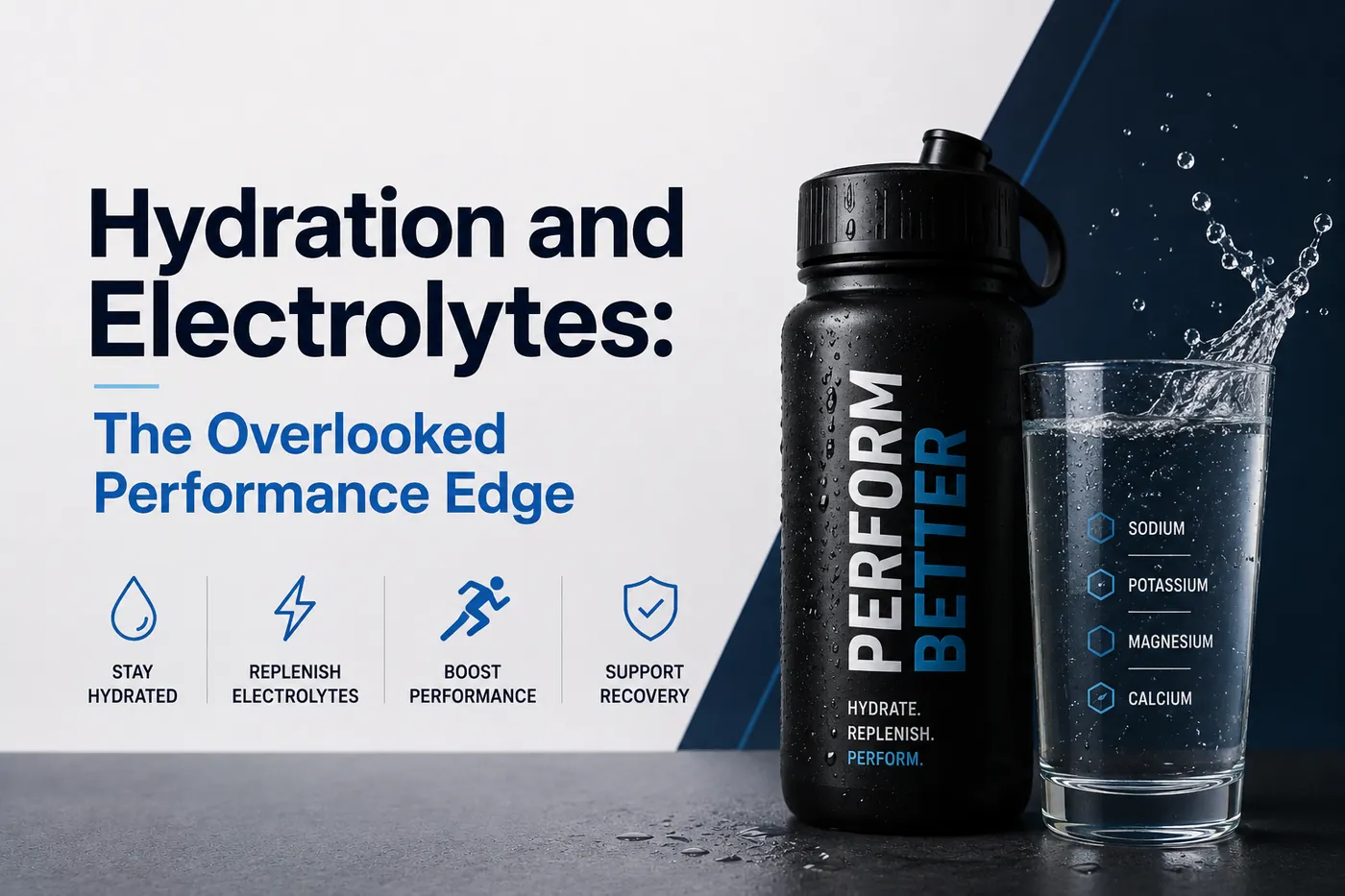
Hydration and Electrolytes: The Overlooked Performance Edge
In a country where summer temperatures exceed 45°C, hydration is not a wellness tip — it is a performance necessity. Here is the complete guide for UAE athletes, including Ramadan fasting strategies and electrolyte protocols.
Training in the United Arab Emirates is unlike any other fitness environment. Summer temperatures routinely exceed 45°C, coastal humidity pushes the apparent temperature higher still, and even a modest outdoor session can strip your fluid and electrolyte reserves in a fraction of the time it would take in a temperate climate. In this environment, treating hydration as a wellness afterthought is not just suboptimal — it is a direct performance liability.
The physiology is unambiguous: a body water deficit of just 2% of total bodyweight measurably reduces muscular strength, cardiovascular efficiency, and cognitive function. At 3–4% deficit — easily reached in an hour of outdoor summer training in the UAE — output can drop by 10–20% and perceived effort spikes sharply. By the time you feel thirsty, you are already behind the curve.
What Dehydration Does to Athletic Performance
Fluid loss impairs performance through multiple mechanisms that compound one another:
- Reduced plasma volume: As fluid leaves the vascular system, blood becomes more concentrated. The heart works harder to deliver the same oxygen volume to muscles. Heart rate climbs at any given workload — a phenomenon called cardiovascular drift — and aerobic capacity falls.
- Impaired thermoregulation: Sweating is the primary mechanism by which the body dissipates exercise heat. As fluid reserves fall, sweat rate efficiency decreases and core body temperature climbs faster. This accelerates fatigue and, in extreme cases, progresses toward heat exhaustion or heat stroke.
- Reduced neuromuscular output: Dehydration affects the electrical properties of muscle and nerve tissue. Peak force generation is reduced, reaction time slows, and motor coordination deteriorates — particularly relevant for skill-based training and sports.
- Cognitive impairment: Even mild dehydration impairs working memory, attention, and decision-making. The rating of perceived exertion rises — every set feels harder than objective measures suggest it should be. Training quality suffers before physical failure occurs.
A 2007 meta-analysis in the Journal of Athletic Training confirmed that hypohydration of just 1.8% of body weight significantly reduced power in trained athletes. Thirst, which appears at approximately 1–2% deficit, is a lagging indicator — not an early warning system.
Electrolytes: What Sweat Takes With It
Sweat is not pure water. It carries a meaningful load of dissolved minerals — electrolytes — that are essential for every aspect of muscular and neural function. Replacing fluid volume without replacing electrolytes is an incomplete strategy that in extreme cases creates its own problem (hyponatraemia — dangerously low blood sodium caused by excessive plain water consumption).
The four electrolytes of primary athletic relevance:
- Sodium (Na+): The dominant electrolyte in sweat. Heavy sweaters can lose 1,500–2,500mg of sodium per hour of intense exercise in heat. Sodium regulates fluid balance in the bloodstream, drives thirst, and is co-transported with glucose in the gut — meaning it also supports carbohydrate absorption and energy delivery during exercise.
- Potassium (K+): Works alongside sodium to regulate fluid within cells and is critical for normal cardiac rhythm and muscle contraction. Potassium depletion contributes to cramping and impaired recovery.
- Magnesium (Mg2+): Involved in over 300 enzymatic processes including ATP energy production and muscle relaxation. Magnesium is lost through sweat, and the persistently elevated sweat output of UAE training creates an ongoing drain. Low magnesium manifests as cramping, poor sleep, and reduced training quality — symptoms often misdiagnosed as overtraining.
- Chloride (Cl-): Works with sodium to maintain osmotic balance and supports digestion through stomach acid production. High sweat rates deplete chloride alongside sodium.
Fluid Targets for Active UAE Residents
Generic hydration guidelines significantly underestimate the needs of active people in hot climates. More realistic daily targets for UAE athletes:
- Sedentary adults in UAE climate: 2.5–3.5 litres total fluid per day (including fluid from food)
- Moderately active adults: 3–4 litres of water per day
- Indoor training (air-conditioned gym, 60 min session): 500–750ml additional during session
- Intense or outdoor training in UAE summer: 750ml–1.2 litres per hour during session, with electrolytes
- Post-session rehydration target: 1.5x the fluid volume lost (weigh yourself before and after — 1kg weight loss ≈ 1 litre fluid lost)
Urine colour monitoring is the simplest practical daily check: pale straw yellow indicates good hydration; dark amber means you are meaningfully behind. Completely clear urine throughout the day may indicate over-drinking and electrolyte dilution — both extremes reduce performance.
A Practical Hydration Protocol for Training
Pre-training (1–2 hours before)
Drink 400–600ml of fluid with your pre-workout meal. Consuming fluids alongside sodium from food significantly improves fluid retention compared to drinking plain water alone. Start each session in positive fluid balance rather than scrambling to catch up mid-workout.
During training (under 60 minutes, air-conditioned)
Sip water as thirst indicates — typically 200–400ml. You do not require electrolyte supplementation for short, moderate-intensity indoor sessions in a cool environment. Drink proactively if intensity is high.
During training (over 60 minutes or outdoors in summer)
Switch to an electrolyte-containing drink. Look for a minimum of 200–400mg sodium per serving, meaningful potassium, and minimal excess sugar unless you need carbohydrates for endurance fuel. Avoid plain water for sessions of this type — diluting electrolytes without replacing them worsens the imbalance.
Post-training
Rehydrate progressively over 1–2 hours rather than gulping large volumes immediately. Your post-workout meal contributes electrolytes naturally — salted food with protein and carbohydrates is the most practical rehydration strategy for most athletes.
Hydration During Ramadan: Fasting Athletes
Ramadan fasting creates a specific hydration management challenge that is compounded during summer months when fasting windows exceed 15 hours. With appropriate planning, performance and health can be maintained through the holy month:
- Suhoor is your most important hydration window. Eat a sodium-containing, balanced meal with 600–800ml of fluid at Suhoor. Sodium at this meal significantly improves how much fluid your body retains through the subsequent fast. Limit caffeine at Suhoor — it adds diuretic load and can accelerate fluid depletion early in the fasting day.
- Optimal Ramadan training windows: Train just before Iftar (break fast immediately after) or 2–3 hours post-Iftar when fully rehydrated. Avoid outdoor midday training during summer Ramadan — the combined physiological demands of fasting and extreme heat create unnecessary risk.
- Iftar rehydration strategy: Begin with water and light food — do not flood the system immediately. Resume normal hydration and eating progressively over the following hour before a training session or a full meal.
- Between Iftar and Suhoor: This is your full rehydration window. Target 2.5–3 litres of fluid spread across this period, with a deliberate electrolyte strategy for athletes training at significant volume.
- Electrolyte supplementation during Ramadan: An electrolyte drink at Suhoor or Iftar helps maintain sodium and mineral balance across the fasting period. This is particularly valuable for athletes where sweat losses during training sessions are high.
Electrolyte Supplements vs. Whole Foods
Whole-food sources cover electrolyte needs effectively on most training days:
- Sodium: Salted food, pickles, olives, cheese, most savoury meals
- Potassium: Banana, sweet potato, avocado, yoghurt, leafy greens
- Magnesium: Nuts and seeds (particularly almonds and pumpkin seeds), dark leafy greens, oats
Where dedicated electrolyte supplements earn their place: sessions over 90 minutes in heat, when appetite is suppressed post-training, for Ramadan athletes needing rapid mineral reloading in a compressed eating window, and for athletes who sweat heavily (visible salt staining on dark clothing is a reliable indicator of high-sodium sweat). A quality electrolyte formula from the JNK Nutrition range in these situations offers convenience and precision that food alone cannot provide.
Hydration is simultaneously the most evidence-backed and most underimplemented performance intervention in recreational fitness. In the UAE's climate, getting it right separates athletes who consistently perform from those who grind through every session in avoidable fatigue. Drink strategically, replace what sweat takes, and treat this as seriously as your training programme.
Frequently Asked Questions
How much water should I drink per day when training in the UAE?+
Active adults in the UAE should target 3–4 litres of water per day as a baseline, plus additional fluid during training — 500–750ml per hour for indoor gym sessions and 750ml–1.2 litres per hour for intense or outdoor sessions in summer. Post-session, aim to replace 1.5x the fluid volume lost.
Do I need electrolyte supplements for every workout?+
No. For sessions under 60 minutes in a cool, air-conditioned gym, plain water is sufficient. Electrolyte supplementation becomes valuable for sessions over 60 minutes, outdoor training in UAE heat, very intense sessions with heavy sweating, and for Ramadan athletes reloading in a compressed eating window.
How can I stay hydrated while fasting during Ramadan?+
The Suhoor meal is your most important hydration window — consume 600–800ml of fluid with a sodium-containing meal before the fast begins. Between Iftar and Suhoor, target 2.5–3 litres of fluid progressively. Limit caffeine at Suhoor. Consider an electrolyte supplement at Suhoor or Iftar if training volume is high.
Can I drink too much water during training?+
Yes. Drinking excessive plain water without electrolytes during long sessions can dilute blood sodium levels (hyponatraemia), causing nausea, confusion, and in severe cases, seizures. For sessions over 90 minutes or when sweating heavily, use electrolyte drinks rather than plain water alone.
What is the best way to check if I am hydrated enough?+
Monitor urine colour throughout the day. Pale straw yellow indicates good hydration. Dark amber means you are significantly behind and should drink more. Completely clear, odourless urine throughout the day can indicate over-drinking. A simple body weight check before and after training (1kg weight loss = approximately 1 litre of fluid lost) provides a precise post-exercise rehydration target.