Sleep, Recovery, and Muscle Growth: The Missing Link
You cannot out-supplement bad sleep — and in the UAE, where Ramadan nights, late social culture, and extreme working schedules conspire against rest, this is a performance factor that most athletes significantly underestimate.
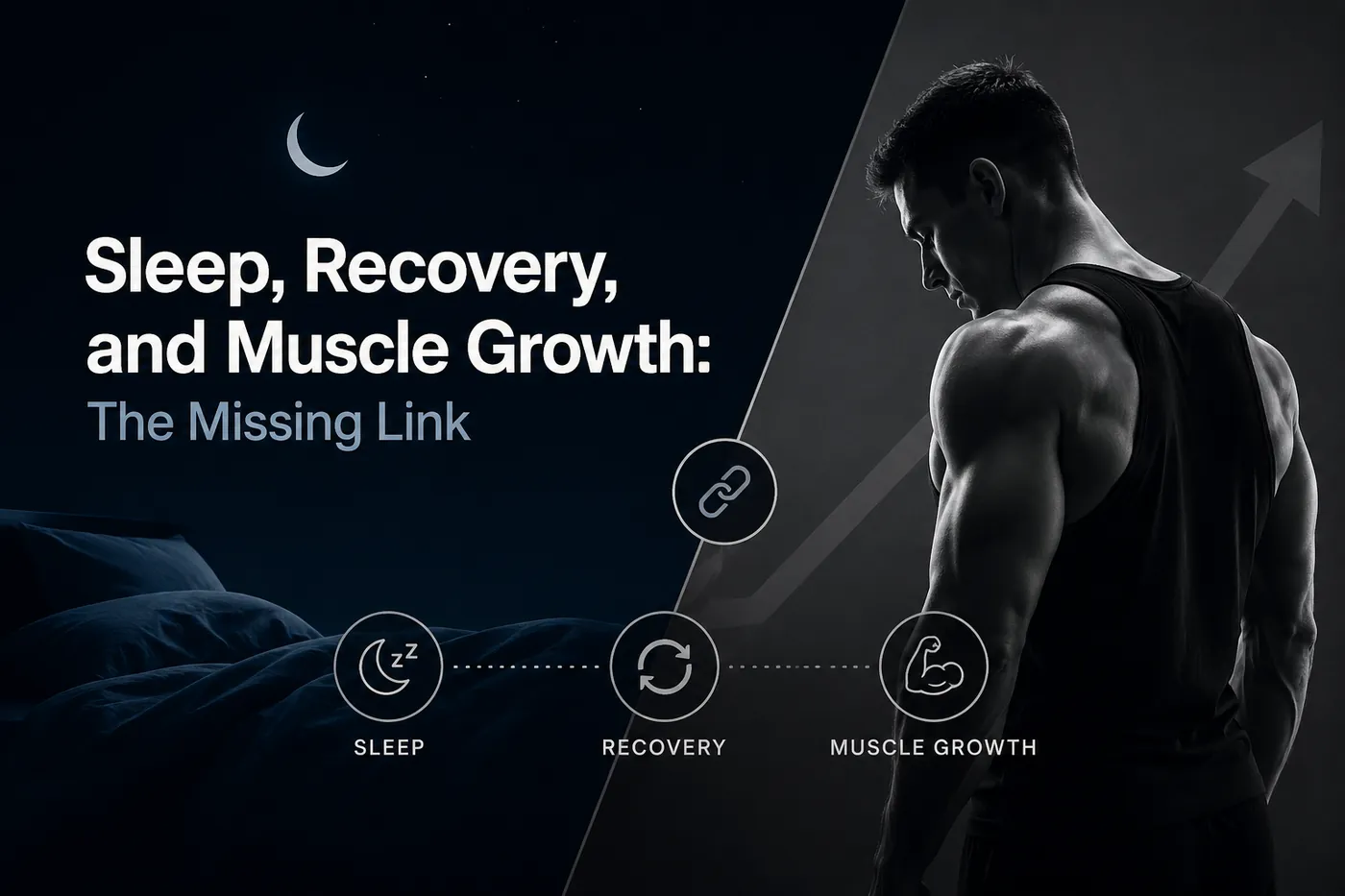
Ask most serious athletes what the most important factors for muscle growth and performance are, and you will hear variations of training, nutrition, and supplements. Sleep rarely makes the top three — and this is a critical blind spot. Sleep is not recovery's supporting actor. It is the primary event. Everything else — training, protein intake, supplementation — either works within the framework that adequate sleep provides or fails to deliver its full potential without it.
In the UAE specifically, sleep is under pressure from multiple directions simultaneously: extreme heat that disrupts thermoregulation at night, a vibrant social culture that pushes bedtimes late, Ramadan's radical restructuring of the day-night cycle, and a work culture where long hours are normalised. The result is a population of athletes making excellent training and nutrition decisions that are being consistently undermined by inadequate recovery.
The Physiology of Sleep and Muscle Growth
The popular understanding that muscles grow in the gym is only half the story. Training creates micro-damage to muscle fibres — mechanical stress that triggers an inflammatory and repair response. The actual building of new muscle tissue happens during rest, and specifically during sleep, where several critical processes converge:
- Growth hormone secretion: Approximately 70–80% of the day's total growth hormone (GH) output occurs during slow-wave (deep) sleep. GH drives protein synthesis, stimulates fat mobilisation, supports collagen synthesis for connective tissue repair, and is a primary anabolic signal. Reduced deep sleep directly reduces total GH output — this is not something supplements can fully compensate for.
- Testosterone maintenance: Testosterone levels are closely tied to sleep quality and duration. A landmark study published in JAMA found that just one week of sleep restriction (5 hours per night) in healthy young men reduced daytime testosterone levels by 10–15% — a reduction comparable to ageing 10–15 years. Lower testosterone impairs protein synthesis and muscle retention.
- Protein synthesis: Muscle protein synthesis remains elevated during sleep — provided amino acids are available. This is the physiological basis for the pre-sleep protein recommendation (30–40g of casein) that research from Maastricht University has consistently supported.
- Central nervous system recovery: The CNS — the neural system responsible for producing muscle force and coordinating movement — recovers primarily during sleep. CNS fatigue from accumulated hard training sessions without adequate sleep manifests as reduced strength, slower bar speed, and reduced movement quality before muscles themselves are the limiting factor.
- Cortisol regulation: Sleep deprivation significantly raises cortisol — the primary catabolic hormone. Chronically elevated cortisol suppresses testosterone, increases muscle protein breakdown, promotes fat storage (particularly abdominal), and impairs immune function. Consecutive poor nights accumulate a cortisol load that progressively degrades the training-recovery cycle.
How Sleep Deprivation Damages Gains
Research quantifying the performance consequences of sleep restriction paints a stark picture for athletes:
- A 2011 Stanford study of NCAA basketball players who extended sleep to 10 hours per night showed significant improvements in sprint times, shooting accuracy, and reaction time — suggesting most athletes are chronically underperforming relative to their potential due to sub-optimal sleep.
- Grip strength, vertical jump, and peak power all show measurable declines after even two nights of shortened sleep.
- Perceived exertion at a given workload increases — making the same session feel harder, reducing training quality, and increasing the likelihood of cutting sessions short or avoiding the gym altogether.
- Appetite regulation is disrupted. Sleep deprivation increases ghrelin (hunger hormone) and decreases leptin (satiety hormone), making calorie control significantly harder — a direct obstacle to fat loss and body composition goals.
Sleep in the UAE: Specific Challenges
Several factors specific to the UAE environment create systematic pressure on sleep quality and duration:
Ambient temperature and bedroom cooling
Core body temperature naturally drops approximately 1–2°C as part of the biological process that initiates and maintains sleep. In hot climates, this requires active cooling. Bedrooms that are too warm — a common occurrence when air conditioning is set high to save energy or if a unit is inadequate — prevent this natural temperature drop and significantly disrupt sleep architecture. For UAE athletes, a cooler bedroom (19–21°C is optimal) is not a luxury — it is a biological requirement for quality sleep.
Late social culture
UAE social culture, particularly in Dubai, includes late-night socialising, dining, and entertainment that routinely extends beyond midnight. Combined with early work or gym commitments, this compresses sleep windows in ways that accumulate significant sleep debt across a week. The weekend "catch-up" sleep that many UAE residents rely on provides partial recovery but does not fully restore the hormonal and CNS deficits of a sleep-deprived week.
Blue light and screen exposure
Like everywhere, but with particular intensity in the UAE's digital and media-heavy culture, late-night smartphone and screen use suppresses melatonin production and delays sleep onset. The specific problem is not tiredness — people can feel subjectively tired but have delayed melatonin that prevents efficient sleep initiation. A 60–90 minute screen-free wind-down period is the highest-leverage single change most people can make to sleep onset time.
Ramadan and Sleep: Navigating the Disruption
Ramadan presents a radical restructuring of sleep patterns that affects both Muslim athletes directly and, through altered gym schedules and social dynamics, non-Muslim athletes in the UAE as well. For observing athletes, sleep management during Ramadan is one of the most impactful performance decisions of the year:
- The Ramadan sleep timeline: Tarawih prayers, late Iftar gatherings, and Suhoor before Fajr often create a fractured sleep pattern — a shorter initial sleep from late evening to Suhoor alarm, then sometimes a brief return to sleep or early morning wakefulness through the work day. This fragmented pattern significantly reduces deep sleep stages where GH secretion peaks.
- Strategic napping: A 20–30 minute nap in the early afternoon (if circumstances permit) can partially offset the reduced nightly sleep. Research on tactical napping shows meaningful restoration of cognitive function and alertness without the sleep inertia of longer naps.
- Protect sleep architecture where possible: Try to consolidate the longest possible uninterrupted sleep block — even if it starts after Tarawih and ends at Suhoor. Six hours of consolidated sleep is considerably more restorative than the same duration fragmented across multiple interruptions.
- Manage training volume during Ramadan: Recognise that reduced sleep during Ramadan means reduced recovery capacity. Maintaining intensity while reducing volume (fewer sets, not less weight) is a more sustainable approach than attempting to sustain full training loads on compromised recovery.
Practical Sleep Hygiene for UAE Athletes
The foundations of good sleep are consistent and evidence-based:
- Consistent sleep and wake times: Your circadian rhythm is a biological clock that performs best on a predictable schedule. Irregular bedtimes — even on weekends — desynchronise this clock and reduce sleep quality.
- Cool, dark bedroom: 19–21°C room temperature, blackout curtains or a sleep mask, and no standby lights. The bedroom environment is a direct input to sleep depth.
- Caffeine cutoff: Caffeine's half-life is approximately 5–6 hours; its quarter-life is 10–12 hours. A 3pm coffee still has meaningful stimulant activity at midnight. For UAE athletes training in the evening and consuming pre-workout at 7–8pm, the caffeine may still be affecting sleep onset at 1–2am.
- Alcohol avoidance: Alcohol may help initiation of sleep but dramatically fragments sleep architecture and suppresses REM sleep — impairing memory consolidation and cognitive recovery. It is not a sleep aid.
- Wind-down routine: 60 minutes of low-stimulation activity before bed — reading, light stretching, mindfulness practice — signals the nervous system that sleep is approaching and allows natural melatonin levels to rise.
Supplements That Can Genuinely Support Sleep and Recovery
A handful of supplements have meaningful evidence for sleep quality improvement — though none should be used as substitutes for the environmental and behavioural foundations above:
- Magnesium glycinate (300–400mg): Magnesium plays a role in GABA receptor activation — the primary inhibitory neurotransmitter that promotes relaxation. Magnesium deficiency (common in athletes with high sweat losses in the UAE heat) is associated with worse sleep quality and more frequent night-time waking. Magnesium glycinate is the most bioavailable and best-tolerated form.
- Ashwagandha (300–600mg KSM-66 extract): Multiple randomised controlled trials show ashwagandha reduces cortisol, improves subjective sleep quality, and reduces the time to fall asleep. Particularly relevant for athletes under high cumulative stress — training, life, and the physiological demands of a hot climate.
- L-Theanine (200mg): An amino acid found in green tea that promotes alpha brain wave activity associated with relaxed alertness. Research shows L-Theanine taken before bed improves sleep quality without sedation, and may reduce the anxiety-related thoughts that delay sleep onset. Often combined effectively with a small amount of magnesium.
- Melatonin (0.5–2mg): Melatonin is a circadian signal hormone, not a sedative. Low doses (0.5–1mg) taken 60–90 minutes before the desired sleep time can help shift sleep onset — most useful for jet lag, shift work, or Ramadan sleep schedule adjustments. Large doses (5–10mg, commonly sold) are not more effective than small doses and may cause next-day grogginess.
Fix the environment and habits first. Layer in magnesium or ashwagandha where ongoing stress or sweat losses create a genuine need. No supplement returns what consistent, quality sleep provides — but the right ones can meaningfully support the recovery process when lifestyle constraints make ideal sleep difficult.
Browse the full supplement range at JNK Nutrition, including recovery and sleep-support options suitable for the unique demands of the UAE training environment.
Frequently Asked Questions
How does sleep affect muscle growth?+
Sleep is when 70–80% of daily growth hormone is secreted, when testosterone levels are sustained, and when muscle protein synthesis processes the damage from training into new tissue. Consistent sleep deprivation reduces GH output, lowers testosterone, elevates cortisol, and directly impairs the hypertrophic response to training. You cannot fully compensate for poor sleep with any supplement.
How much sleep do athletes need?+
Research on athletes consistently shows that 8–10 hours is optimal for performance and recovery — more than the 7–9 hours recommended for sedentary adults. The higher recovery demands of regular training increase both deep sleep requirements and total sleep needs. Most recreational athletes significantly underachieve relative to this target.
How can I manage sleep during Ramadan?+
Consolidate the longest possible uninterrupted sleep block even within the Ramadan schedule — typically from after Tarawih to Suhoor. Use a 20–30 minute early afternoon nap if circumstances allow. Reduce training volume during Ramadan to match the reduced recovery capacity. Protect your sleep environment (cool, dark room) and limit screen use before sleep.
Does magnesium actually improve sleep quality?+
Yes, with caveats. Magnesium plays a role in GABA receptor activation, promoting relaxation. In individuals with low magnesium status — which is common in UAE athletes due to high sweat losses — correcting the deficiency through magnesium glycinate supplementation (300–400mg) meaningfully improves sleep quality and reduces night-time waking. It is not a sedative for well-replete individuals.
Is melatonin safe to take regularly?+
Low-dose melatonin (0.5–2mg) appears safe for short-term use and is appropriate for jet lag, shift work adjustment, and Ramadan schedule management. It is a signalling hormone, not a sedative, and works best when used to adjust sleep timing rather than as a nightly sleep aid. Long-term regular high-dose use is not recommended — address the underlying sleep hygiene factors instead.